


The initial stages of onychomycosis are a pathology characterized by loss of healthy shine, fragility, color and thickness changes of the nail plate.Once the pathological symptoms are understood, the patient can contact a specialist promptly.Treatment will stop the disease from occurring, while preventive measures will prevent the disease from developing again.
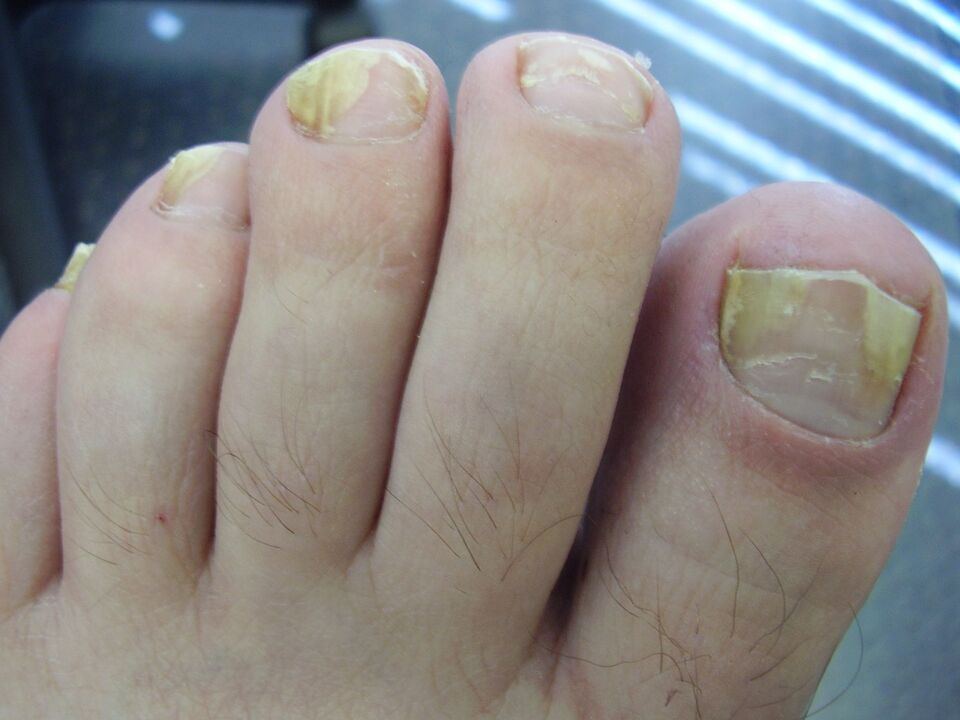
Latent onychomycosis
One of the most common infectious diseases is onychomycosis, commonly known as onychomycosis.Not only is this pathology common, it is also very insidious and therefore requires careful treatment.Onychomycosis belongs to the category of infectious diseases.Without medical care, it can become chronic and have serious consequences.Diseases do not appear out of thin air, it all depends on people's hygiene habits and occupational characteristics.People of all ages are affected by this disease.The fungus most commonly affects the feet and big toenails.The nail plates on the hands are less affected.Sometimes, hand infections occur due to lack of hygiene standards during manicure or infected feet."Household" infections due to shared sanitary products often occur.!Fungus on the hands is not only a medical problem but also an aesthetic problem.As the pathology progresses, patients develop complex conditions.
Pathogen
trihofitii, a fungus of the genus Candida, is a major causative agent of infectious pathology.In rare cases, these are mold.According to statistics, there are about 20 species of tripoda parasitizing human skin.The special characteristics of microorganisms are spore formation, resistance to high and low temperatures, resistance to drying, and resistance to preservative fluids.Once inside the skin or under the nail plate, the tripodal spores can grow and degenerate into microorganisms.They penetrate deep into the skin and nails in the form of fine threads (mycelium).Mycelium has a dense cell wall that protects them from the immune system and the antibodies that have begun to fight against them.!The parasite penetrates the bloodstream and spreads throughout internal organs and systems.As a result, nails and lymph nodes in different parts of the body are affected.
source of infection
The asymptomatic course in the early stages of the disease is the cunning of the parasite.Fungus on fingers and toes is barely visible in the early stages of infection.The favorable microclimate for microbial activity and reproduction is heat and moisture.Therefore, it is not surprising that infections occur in public places (saunas, water parks, swimming pools, gyms, transportation, train stations).Infection carriers leave tiny flakes of skin and fingernails on everything they touch (handrails, shower stalls, sauna benches, towels, shoes, floors, exercise equipment).Abandoned spores quickly find new victims and habitats, where they actively grow and reproduce.The first people to be attacked by parasites are those with: low immunity; physical weakness due to disease; disturbances in the psycho-emotional background; injuries to the skin and nail plates; problems in maintaining hygiene rules.Wood bath enthusiasts are also at risk of infection.Wood has a porous structure and complete sterilization is impossible.Fungal spores are considered permanent residents of bathrooms, saunas made of natural materials or wherever wooden household items are present.!Sources of infection are warm and humid places, sanitary products, bed sheets, improperly made manicure tools, and sometimes even cutlery!
clinical form of pathology
Onychomycosis is a condition that requires immediate medical attention.First determine the pathological clinical grouping.Clinical form: nutritionally normal form.Symptoms appear slowly.Parasites attack the nail from the inside.Notice small yellow spots that increase over time and spread.Hypertrophic type.The infection affects the nail bed and nail plate.Nails are covered with cavities and nodules.Fingers and toes suffer.The deck is separated from the bed.A white tint appears.Interesting!The disease often presents symptoms in many forms.
Symptoms of fungal infection
The same symptoms appear early in the infection.The first alarming symptom of the disease is a change in the shape and color of the toenails (the cause of yellow toenails).What does the disease look like in the first stages?Initially, the fungus affects gradually and gradually spreads throughout the area.Depending on the location, the following types of pathology can be distinguished:
- Distal view.The top of the nail is affected.
- Side view.The infection occurs on the sides close to the skin.
- Proximal view.The surface of the board is contaminated.
- Proximal view.Lesions near the nail fold.
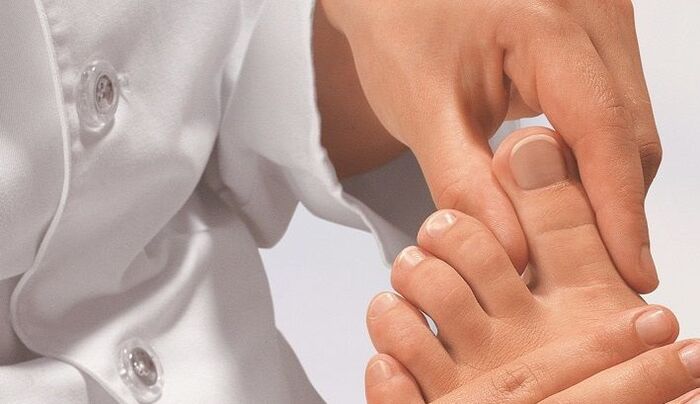
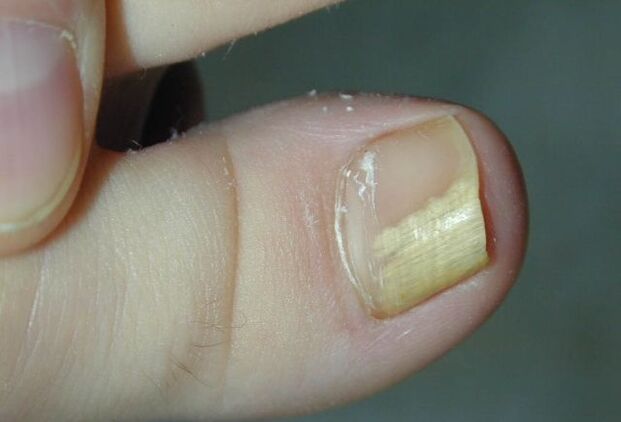
The general symptoms of a first microbial attack are easily noticeable.The color of the plate is striking, changing from pink to dark yellow and then to gray.The structure changes, irregularities and nodules begin to appear.Later, vertical stripes, spots, blurs appear.The lesion area is thickened, sensitive, and fragile.The infection begins to spread to the skin, which becomes red and inflamed.Fungus on the fingers is more common in women, although in some cases men suffer from the condition as well.
There are parasites on the hands.Main symptoms:
- tarnished, dull
- white spots on nails
- As the disease progresses, the plates turn gray or brown
- peeling skin on palms and fingers
- Brittle, delaminated, chipped nails
- black streaks on nails
- The skin near the lesion changes, swelling, redness, and peeling
.Photo view of a nail affected by onychomycosis.The symptoms of foot fungus and hand fungus have many similarities.
fungus on toes
Microorganisms on feet, symptoms:
- The plate is partially covered with yellow, fuzzy spots
- The color becomes dull and the luster disappears
- Thickening and flaking noted
- Loss of skin between toes; slight itching between fingers
- Feet smell bad
Treatment at the first stage of pathological development is an important decision, since onychomycosis is characterized by its rapid progression.Left untreated, it can lead to deformation of the nail plate and the accumulation of toxic toxins secreted by the parasite.Once in the bloodstream, the toxin poisons the body, disrupts the function of vital organs, and impairs metabolic processes.
infection control methods
How to treat onychomycosis?Treatment begins with a visit to the doctor, who will prescribe an LBC culture procedure (scraping from the lesion) and other studies.Diagnostic tests will help determine the type of fungal infection and the patient's sensitivity to medications.The initial phase of treatment requires the patient's full commitment.Since the road to full recovery is long, you need to be patient.To avoid the chronic form, it is important to follow all your doctor's recommendations.
As a complex treatment, the following methods are used:
- Preparations for moisturizing, nourishing tissues, restoring metabolic processes - creams, ointments, gels
- Meant to prevent the development and spread of infection - solutions, drops; late stage infections can be treated with tablets and injections
At the onset of the disease, treatment is required with non-steroidal and steroidal drugs (varnishes, ointments).They will prevent further activity and proliferation of parasites, strengthen the immune system and initiate the regeneration process.
External use:
- Antifungal medications – used to fight Candida and yeast-like fungi.
- Allylamine agents are active only against fungi.
- Cream (main ingredient is snake oil).
- gel.
- paint.
To slow down the fermentation of mycelium, the drug is formulated into tablets with a bactericidal effect.
Tablet list:
- The capsule is a fast-acting medication that requires no additional medication.In the meantime, use a varnish or gel to restore the look of your nail plate.
- Herbal Antifungal Kit - This medicine works instantly using herbal extracts and synthetic compounds in the medicine.
- Capsules - Activate the body's defenses and normalize the state of the microbiome.
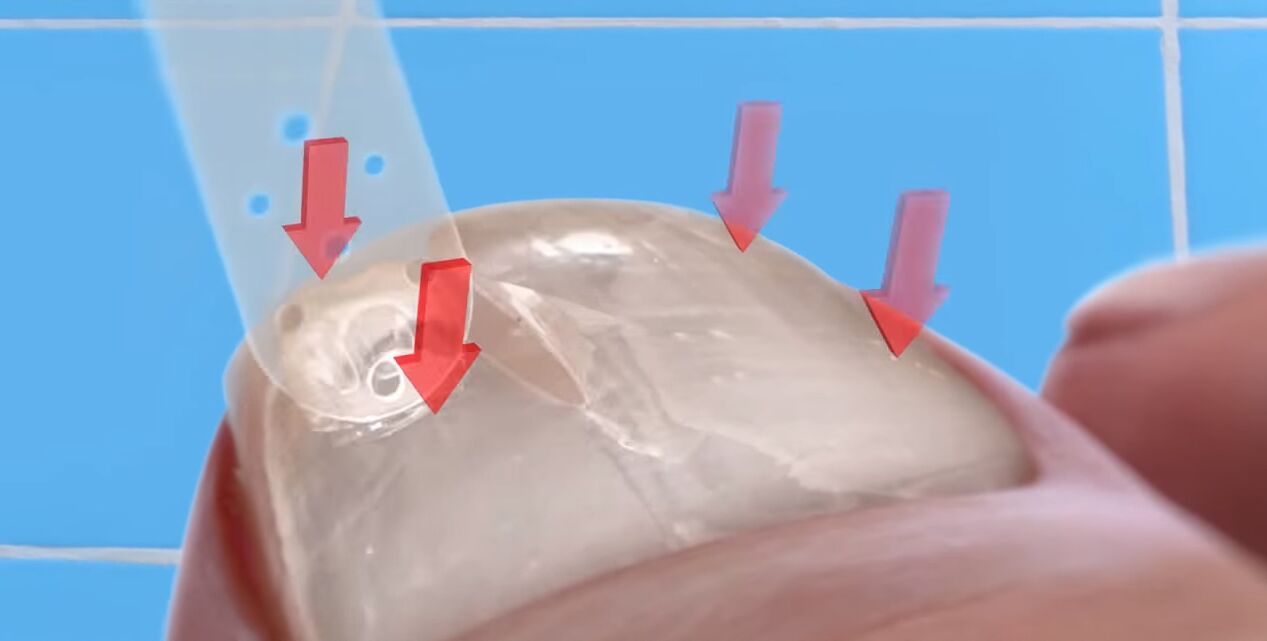
- Drops - Since the main ingredient is naftifine hydrochloride, it acts quickly, is absorbed into the skin and creates long-lasting protection.The film formed by the drops prevents microorganisms from penetrating into the deeper layers of the dermis.
In the initial stages of the disease, folk remedies are used for treatment.Apple cider vinegar, iodine, hydrogen peroxide, strong tea infusion, celandine oil, pepper spray, 35% salicylic acid work well against parasites.It is important to consult your doctor before using pharmaceutical or traditional medicines.
prevention
After treating an infection, preventive measures need to be taken.
suggestion:
- Don’t use someone else’s shoes or hygiene products;
- Only comfortable shoes, made of natural materials;
- Clean socks, changed every day;
- comply with hygiene rules;
- Use absolutely clean tools to care for your nails;
- To strengthen your immune system, take vitamins.
in conclusion
Fungal disease is a disease that no one is immune to.Both people with compromised immunity and perfectly healthy people can become infected.Therefore, it is very important to keep your surroundings clean, take care of your health, and maintain hygiene.Of course, these measures cannot guarantee 100% safety, but they can minimize the possibility of infection by pathogenic microorganisms.